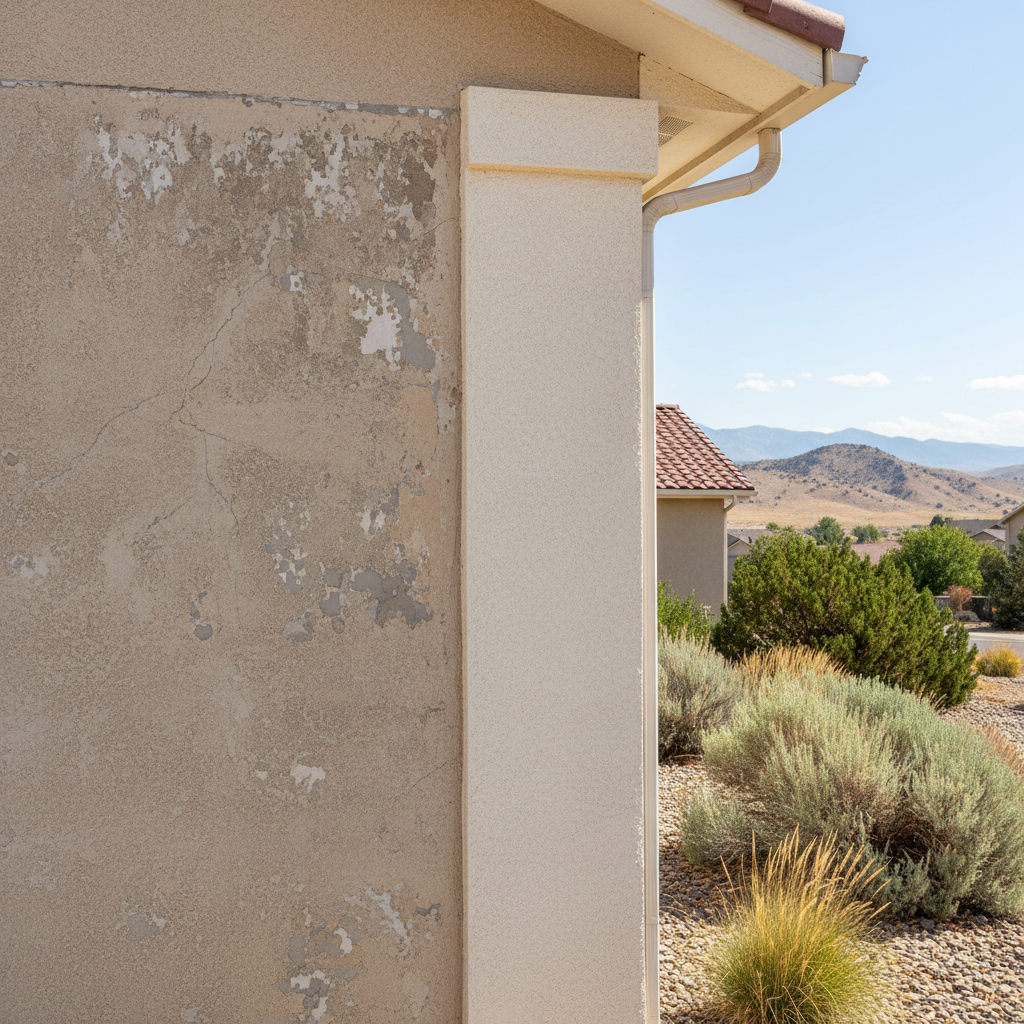
Your stucco looks tired, maybe you're seeing some hairline cracks, or you just want a fresh color. It's time for a redash. But what does that even mean? Here in Draper, especially with our wild freeze-thaw cycles and the sun beating down, you've generally got two main ways to approach it: a full traditional re-coat or putting a new acrylic finish right over what's already there.
I've seen houses all over Draper, from SunCrest to the older spots down near I-15, and honestly, both methods have their place. But they're not exactly equal, especially when you think about our local weather.
The Full Traditional Re-Coat: Built to Last
This is usually my go-to recommendation if your existing stucco is pretty rough or if you want the absolute longest-lasting fix. With a full re-coat, we're essentially putting a whole new stucco system right on top of your old one. It generally goes like this:
- First off, we clean and prep the stucco that's already there. This might mean power washing it and making sure any loose bits are gone.
- Then, we put on a new scratch coat. This is a cement-based layer that gives us a strong, even surface to build on.
- Next comes the brown coat, another cement layer that adds thickness and gets everything perfectly flat.
- Finally, we apply the finish coat. This can be a traditional cement-based finish or an acrylic one, depending on the look and how durable you want it to be.
Think of it like giving your house a whole new skin. It's tough, it's thick, and it's built to handle a lot. Those multiple layers add serious protection and structural integrity. It's a fantastic choice for homes that have really taken a beating from the weather or have some deeper, non-structural cracking. What a difference it makes!
The Acrylic Finish Over Existing: A Modern Refresh
Now, if your existing stucco is in pretty good shape — maybe just faded, with only minor surface cracks, or you simply want a color change — then putting a new acrylic finish directly over it can be a solid option. This is a much more straightforward process:
- We thoroughly clean and prep the existing stucco. Any big cracks or damage will need patching first, of course.
- Often, we'll put down a primer or a super thin base coat. This helps it bond well with the old surface and gives us a consistent base for the new finish.
- Then, we apply the new acrylic finish coat. These finishes are incredibly flexible, come in tons of colors, and really resist fading and cracking.
This method is more about sprucing up the appearance and adding a new protective layer. It's quicker, often less messy, and usually costs less upfront than a full re-coat. Acrylic finishes are also great because they breathe but still keep water out, which is super important for houses here in the Salt Lake Valley with our wet winters and dry summers.
Cost: What's Your Wallet Saying?
Let's be real, money always plays a part. A full traditional re-coat is going to be pricier. You're paying for more materials and a lot more labor because we're putting on multiple coats. It's an investment, no doubt about it. The acrylic finish over existing stucco, on the other hand, is generally easier on the budget. Fewer layers mean less material and less time on the job. It's kind of like the difference between rebuilding a deck versus just staining it, isn't it?
Durability & Maintenance: How Long Will It Last?
When it comes to durability, the full traditional re-coat usually wins in the long run. Those multiple layers of cement-based stucco create a much thicker, more impact-resistant, and tougher shell for your home. It's going to stand up better to hail, kids playing ball, and general wear and tear. Maintenance is pretty standard for both — occasional cleaning, keeping an eye on caulk lines, that kind of thing.
The acrylic finish is very durable in its own way, especially against cracking and fading. It's flexible, so it handles minor building movement and temperature changes really well. But it's not as thick or impact-resistant as a multi-coat system. If your underlying stucco has structural problems, a new acrylic finish won't fix those; it'll just cover them up for a while.
Appearance: What Look Are You Going For?
Both methods can give you a fantastic new look. With a full re-coat, you can get a wider range of textures, from smooth to heavily textured, because you're building up the layers. With an acrylic finish, you're usually limited to textures that can be achieved in a single, relatively thin coat, but there are still plenty of options. The color choices for acrylics are practically endless, and they tend to hold their color better over time than traditional cement finishes.
My Recommendation for Draper Homes
Considering our specific climate and how old many homes in Draper are, I tend to lean towards a full traditional re-coat if your stucco really shows its age, has widespread cracking, or if you plan to stay in your home for a very long time. The added thickness and durability are just a better long-term investment against our weather and the general wear and tear of life.
However, if your stucco is structurally sound, mostly just faded, and you're looking for an affordable way to boost your home's curb appeal, then an acrylic finish over the existing stucco is a perfectly good — and often excellent — choice. It's a great way to modernize your home's look without breaking the bank.
Ultimately, the best approach really depends on what kind of shape your existing stucco is in and, of course, your budget. The only way to truly know for sure is to have someone like me from Infinite Stucco Solutions come out and take a look. We can assess your home's specific needs and give you an honest recommendation. Don't guess — let's get it right the first time.