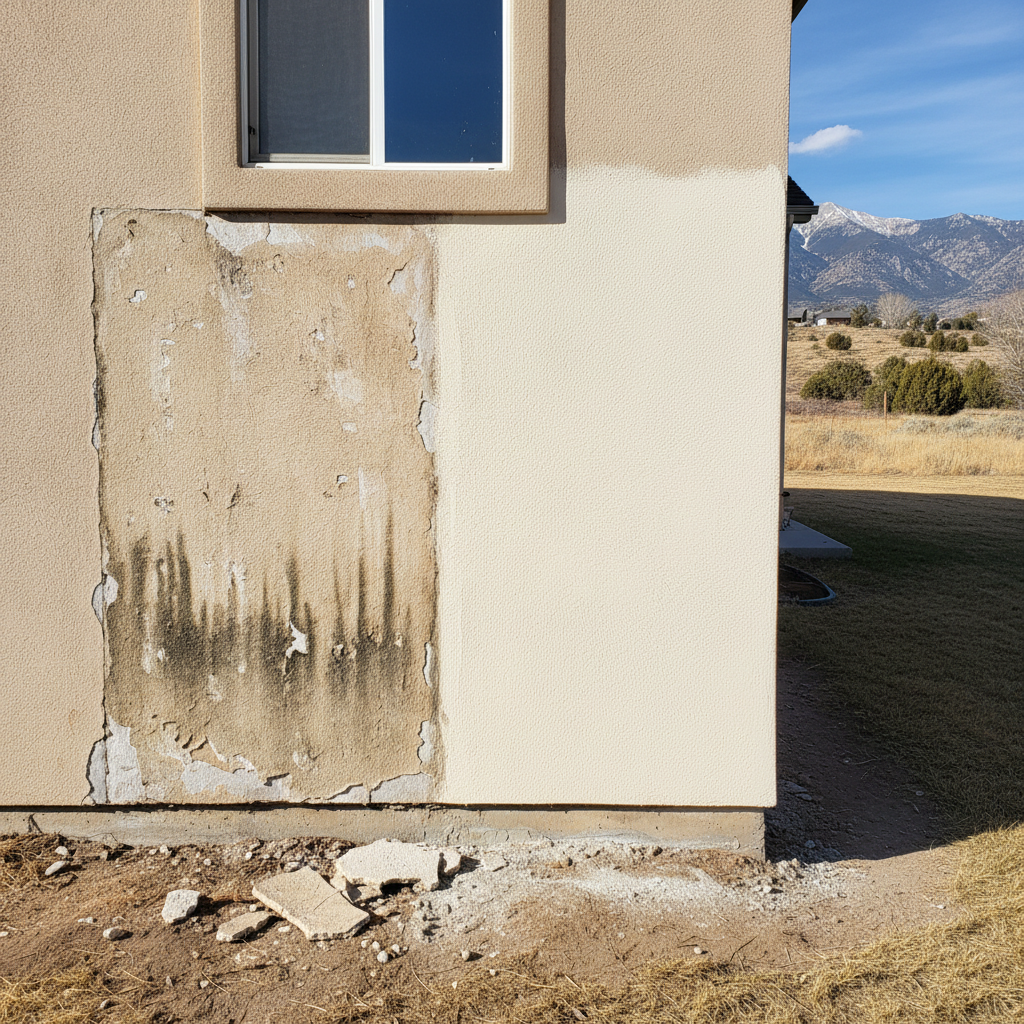
Thinking about stucco for your place? Or maybe you're finally replacing that old siding? You've probably heard a couple of terms tossed around: 'hard coat' and 'EIFS.' What's the real difference between them, and which one makes more sense for your home right here in Draper?
Traditional Hard Coat Stucco: The Old Reliable
Let's kick things off with hard coat. Some folks just call it 'traditional stucco,' and honestly, it's been around forever. We're talking a mix of cement, sand, water, and lime. Crews put it on in three layers over a lath – usually a metal mesh – and a weather-resistant barrier. The last layer? That's where it gets its texture and color.
- Cost: Generally, hard coat stucco costs less up front than EIFS. The materials are simpler, and even though it's labor-intensive, it doesn't need the same specialized installation EIFS does. Expect a lower initial bid for a hard coat job.
- Durability: This stuff is seriously tough. It's a rigid, cement-based system, so it can really take a hit. Think about a soccer ball slamming into the wall – hard coat handles it. It's also fire-resistant, which is a nice bonus.
- Maintenance: Pretty easy, actually. Just keep it clean, watch for cracks (especially around windows and doors), and get them sealed up. A small crack usually means just a surface issue, and you can fix it without too much fuss.
- Appearance: Hard coat gives you that classic, solid masonry look. You can choose from tons of textures, from super smooth to quite rough, and it holds its color well. It's got a timeless appeal, you know?
EIFS Stucco: The Modern Approach
Now, EIFS stands for Exterior Insulation and Finish System. This is a synthetic stucco, and it's quite different. Instead of a cement base, it starts with an insulation board – usually expanded polystyrene, basically thick foam – that attaches right to your sheathing. Then, a base coat with a reinforcing mesh goes over that, and finally, a finish coat that looks just like stucco.
- Cost: EIFS typically costs more up front. The materials are more specialized, and the installation process demands a higher level of precision and specific training. You're paying for that insulation and the system's overall performance, after all.
- Durability: EIFS is surprisingly durable, but in a different way than hard coat. It's more flexible, so it's less likely to crack from minor shifts in your home's structure. However, it doesn't stand up to impacts as well as hard coat unless you use specific impact-resistant meshes, which, of course, add to the cost. A sharp hit can dent or even puncture the foam insulation underneath.
- Maintenance: This is where EIFS gets a little more particular. The biggest thing with EIFS is managing water. If water somehow gets behind the system – maybe from a bad installation or damage – it can cause serious problems because that insulation can trap moisture. Regular checks for sealant integrity, especially around things like windows and doors, are super important. You'll definitely want any repairs done by someone who truly understands EIFS.
- Appearance: EIFS can really nail the look of traditional stucco. You get a huge range of colors and textures. Since it's synthetic, you can often get even smoother finishes than with hard coat.
The Big Question: Which One for Draper Homes?
Alright, so you've got two solid choices. For homeowners right here in Draper, especially with our sometimes wild temperature swings – I'm talking hot summers and cold winters – and the occasional heavy snow loads we get up on the east bench, insulation is always a good thing. EIFS offers superior insulation properties, which can mean lower heating and cooling bills. That's a real benefit when your AC is blasting in July or your furnace is working overtime in January.
However, and this is a pretty big however, EIFS absolutely needs perfect installation. If it's not put in correctly, especially the flashing and sealing around windows and doors, you're just asking for water problems. We've seen it happen in homes all over Salt Lake Valley, including right here in Draper. Water damage behind EIFS can be a total nightmare to fix, and it's usually way more extensive than just patching a hard coat crack.
For most of my clients at Infinite Stucco Solutions, and for the typical conditions we deal with, I generally lean towards traditional hard coat stucco. Why? Because it's more forgiving. While proper installation is always crucial, hard coat has a natural breathability that EIFS doesn't. It's less likely to suffer catastrophic failure from minor water intrusion because it can dry out more easily. The durability against physical impact is also a huge plus for active families, isn't it?
If you're really chasing those energy savings and are prepared to invest in a top-tier, highly experienced EIFS installer who guarantees their work down to the last detail, then EIFS can be a fantastic system. But for a little more peace of mind, lower upfront costs, and a system that's proven itself for centuries, hard coat stucco is often the smarter, safer bet for your Draper home. You get that classic look, solid protection, and a system that's a bit more resilient to the everyday bumps and the occasional Utah weather challenge.